Investigating The Effect of Pogostone on the Activation of the -Fas /FasL Pathway p38-ASK1 in Breast and Prostate Cancer Cell Lines

Article Sidebar
-
pogostone, prostate cancer, breast cancer, apoptosis
Abstract
Background The incidence of breast and prostate cancer is rising, Stronger scientific proof is becoming required to support the use of herbal remedies in conventional disease treatment.
Goal: An evaluation of the effectiveness of herbal remedies in the conventional treatment of prostate and breast cancer is necessary. Pogostone's historic therapeutic properties led to its selection for this investigation.
Techniques: The impact of pogostone on the survival of prostate and breast cancer was examined using the MTT method. Fas and Fas L was examined using diphenylamine staining. The control and treatment patients were compared using real-time PCR testing.
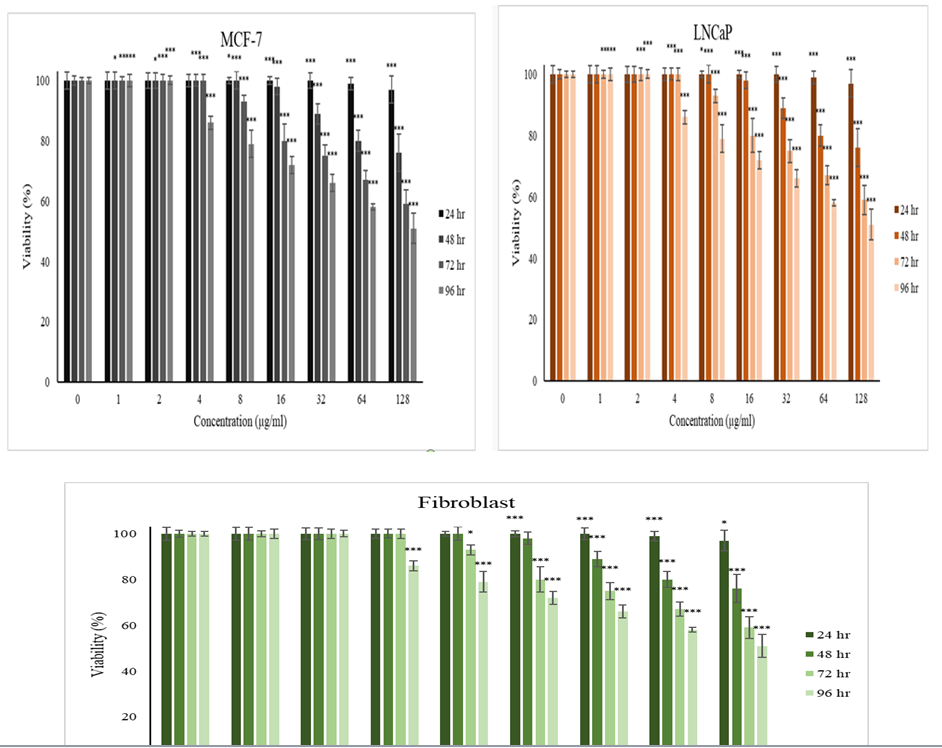
Results: After 24, 48, 72, and 96 hours, pogostone reduced cell viability in a concentration-dependent way. ASK1, p38, Fas, and FasL gene expression considerably increased in both cancer cell lines after 24 hours, and the IC50 concentration of pogostone dramatically promoted apoptosis in both cell lines (p?0.05).
Conclusion: pogostone inhibits the growth of breast and prostate cancer cells via activating the p38-ASK1-Fas/Fas L pathway, which results in apoptosis